
Duplicate student rosters
Which candidate list is current?
Every drive creates a new copy of eligible students. When academic records or backlogs update, drive spreadsheets stay behind.
Bring student records, opportunities, eligibility, drives, offers and reporting into one institution-owned operating system.
Resumes in inboxes, eligibility criteria in spreadsheets, shortlists in messaging groups, and offers in unverified emails. Every coordinator, department and student keeps their own copy, and none of them agree.
Which candidate list is current?
Every drive creates a new copy of eligible students. When academic records or backlogs update, drive spreadsheets stay behind.
Can this decision be audited?
Criteria, rules and policies are calculated by hand under time pressure, leading to disputes and unexplainable rejections.
Did the office verify these terms?
WhatsApp claims and unverified off-campus offers skew institutional reporting without a verifiable audit trail.
From the first student import to the last joining update, each workflow builds on the same scoped, auditable record.
Student foundation
Opportunity engine
Drive operations
Offers and outcomes
Student communication
Reporting and control
Import students, verify records and publish the placement policy.
Approve recruiter access, publish JAFs and explain eligibility.
Run applications, rounds, scorecards, schedules and D-Day.
Verify offers, capture responses, PPOs, joining and outcomes.
Use one metric library across dashboards, reports and exports.
The platform follows the operating model of a placement cell, so handoffs do not become new spreadsheets.
The placement office coordinates the season while students and recruiters get focused, responsive workspaces of their own.
Placement office
See the season pulse, act on attention queues and open the source record behind every number.
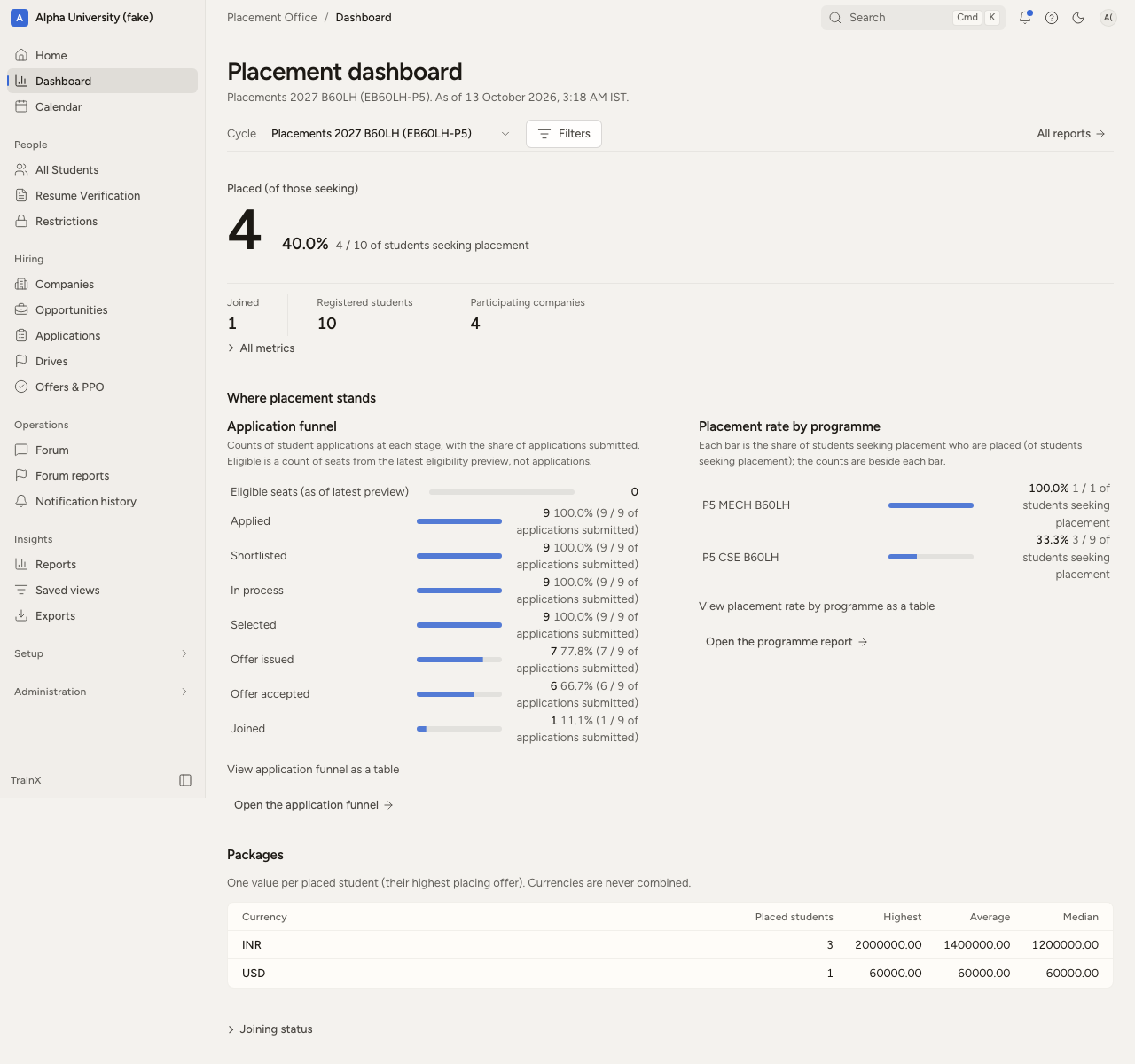
Each tenant keeps its own domain, identity and accent while the product structure remains consistent for every role.
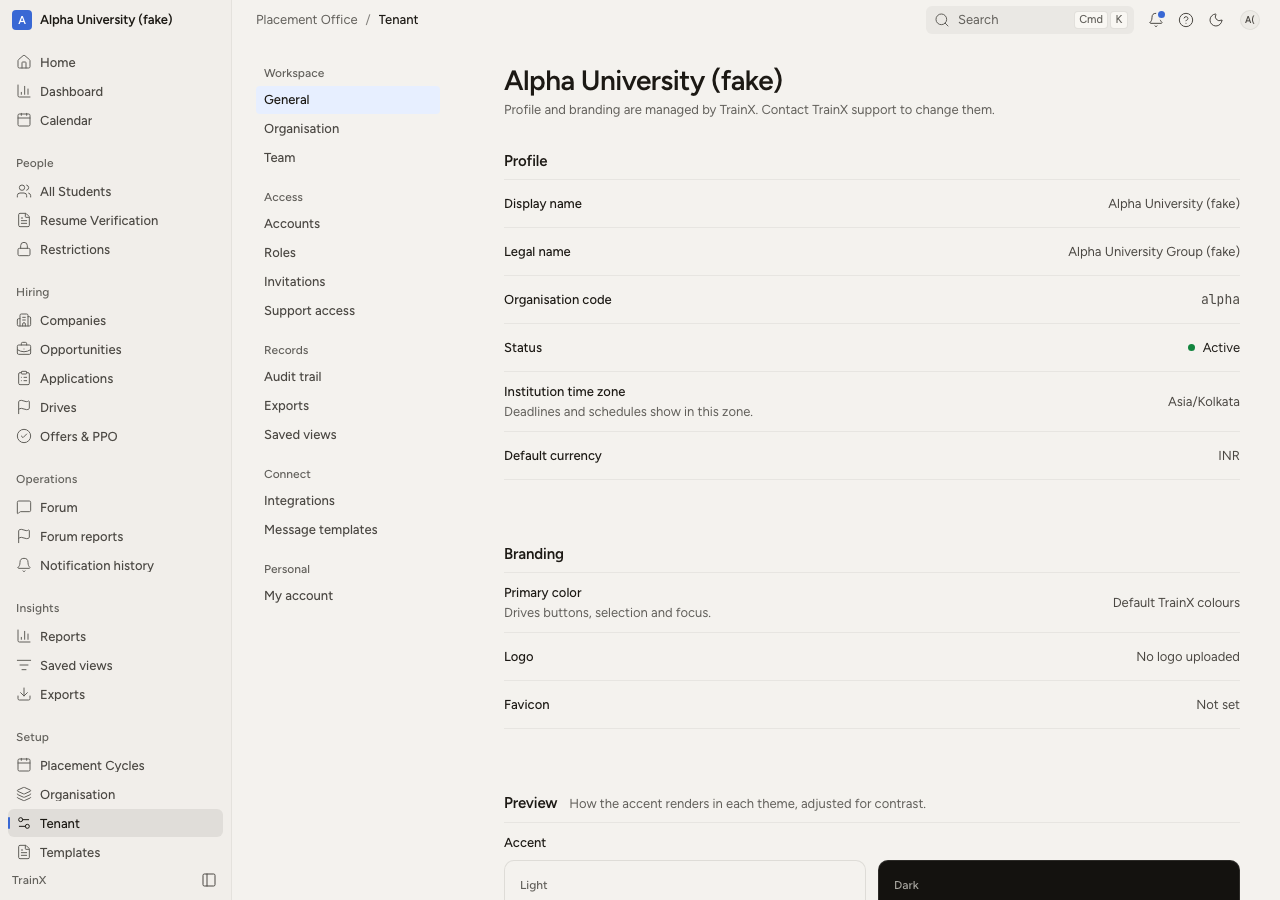
Security is product behaviour: what a person can do, which institution they can do it in, and what remains on record.
PostgreSQL row-level security is forced for tenant data.
Permissions and institution scope decide which records are reachable.
MFA protects privileged actions and sensitive recovery paths.
Business actions and authentication events are recorded separately.
Support access is read-only, time-limited, visible and audited.
Clear product boundaries make a better pilot and a more reliable placement season.
No. TNP is designed to operate as a standalone product. The current UMS adapter is a development adapter, not a live integration.
Published, versioned rules are evaluated deterministically. Missing required data fails closed with an explanation, and submission re-runs eligibility before saving a snapshot.
No. Recruiters can request access and submit opportunities, but the placement office retains approval. Recruiter-issued offers remain hidden from students until the office verifies them.
Yes. Internship cycles, internship offers and official outcomes are kept distinct from final placement. An accepted internship can be linked to a PPO in a placement cycle without auto-accepting it.
Event notifications use in-app and email. Announcements can also use consent-based WhatsApp templates where configured. SMS and calendar sync are out of scope.
Not yet. The current product is code-verified for staging. We are inviting institutions to book a demo and discuss pilot readiness.
Bring the spreadsheet. We’ll map the season.